Premiering within the programme of BFI Flare, Uchronia doesn’t just tell a story in a conventional sense. Instead, it pulls you into a fragmented, hypnotic, and deeply political meditation on queer history, identity, and resistance.
Directed by Fil Ieropoulos and written by Foivos Dousos who also steps into the film as a performer.
At the centre of Uchronia is the spectral presence of Arthur Rimbaud not as a historical figure confined to textbooks, but as a restless spirit drifting through 150 years of queer and revolutionary history. Inspired by A Season in Hell, the film reimagines Rimbaud not as someone we study, but someone who witnesses. Through him, we encounter figures, movements, and identities that have shaped and often been erased from history.
But Uchronia is not interested in clean timelines or easy narratives. It feels like Time collapses and Identities blur. History becomes something you feel rather than something you follow and that’s exactly the point.
What makes Uchronia so powerful, especially within the context of BFI Flare, is its refusal to present queer history as something static or safely archived.
The film mixes together voices and figures across decades from revolutionaries to cultural disruptors creating a tapestry that reminds us that queer existence has always been political.
There’s a sense throughout the film that history is not just something we look back on, it’s something still unfolding. And in that way, Uchronia becomes less about the past and more about the present moment we’re living in right now.
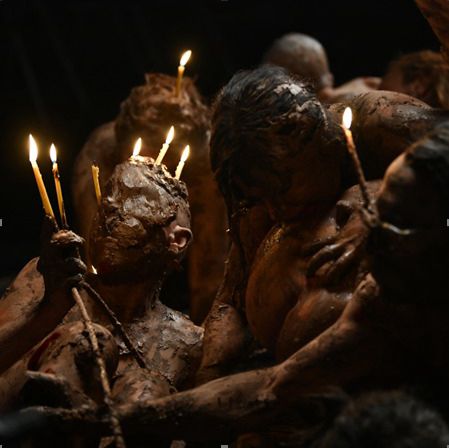
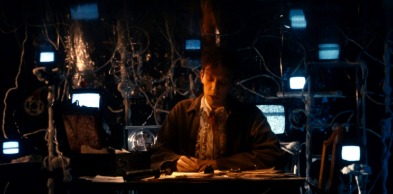
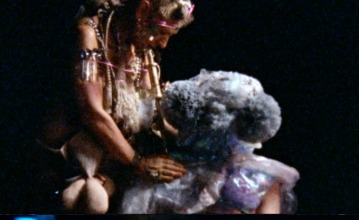
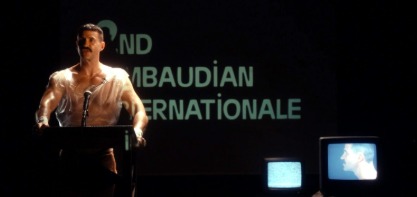
Visually, Uchronia is overwhelming in the best way possible. Psychedelic textures, theatrical performances, archival echoes, and stylised compositions collide into something that feels almost dreamlike or perhaps more accurately, like a fever dream of collective memory.
One of the most compelling layers of Uchronia lies in Foivos Dousos’ dual role as both writer and performer(Jack Smith).There is something inherently intimate, almost vulnerable about stepping into a world you’ve created yourself. And you can feel that presence throughout the film. This blurring of creator and creation adds another dimension to the film’s themes of identity reinforcing the idea that history, art, and self are all deeply interconnected.
Uchronia is not a film for passive viewing.It demands your attention.Uchronia is a film that won’t be for everyone, but for those willing to dive into its chaos, it becomes something unforgettable.
"Uchronia doesn’t ask you to understand it. it asks you to feel lost inside it."